
Vertical Agri-PV from the technology leader
Known from











Fields2Sun Pro
Fields2Sun Pro
Fields2Sun Max
Fields2Sun Max
Fields2Sun Pro
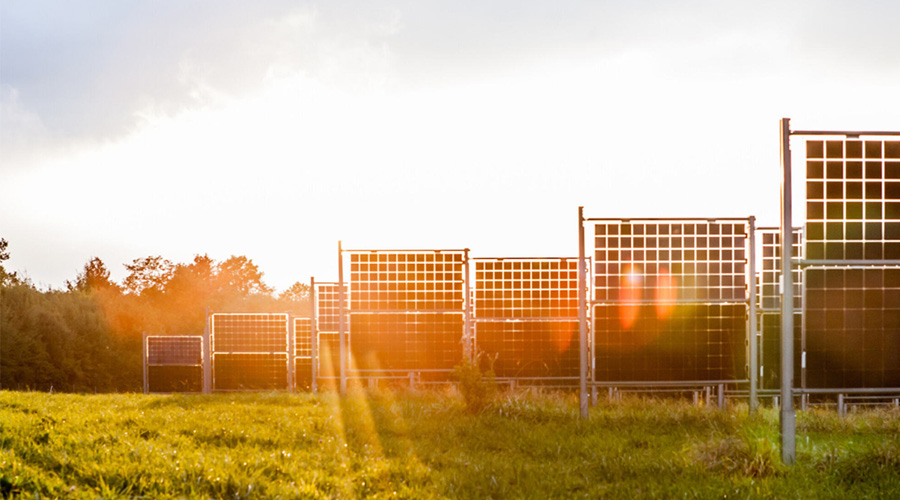
Fields2Sun Pro is Next2Sun’s fully optimized system. Thanks to shading-optimized mounting structure and cabling, as well as the use of optimized frameless modules with maximum bifaciality, it delivers the highest specific yield and thus the greatest possible additional market value.
Fields2Sun Max
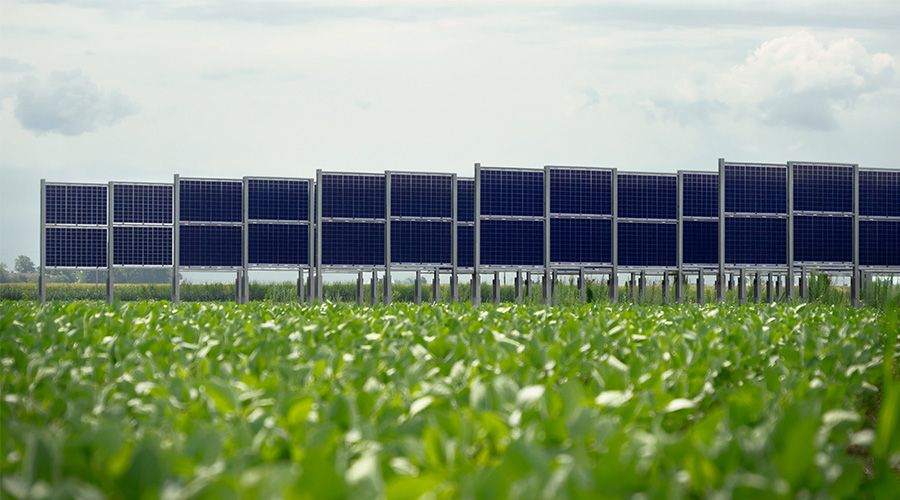
Fields2Sun Max is the utility solution for large-scale projects. It is designed for installing high-performance modules (> 700 Wp) and allows the installation of a wide range of standard modules. The overall system is not quite as optimized as Fields2Sun Pro, but it is more flexible to plan, especially for larger projects.
Technology leadership with 2Sun technology
The 2Sun technology developed over the past 10 years has given the Next2Sun Group a comprehensive technological lead. The Next2Sun Group has built up various patent families and protected them in many countries around the globe, securing the technology in key sub-areas for the long term.
Maximum energy yield
Maximum energy yield
Thanks to its vertical east-west orientation, the system generates grid-supportive power mainly in the morning and evening—exactly when demand is high. This increases feed-in revenues and enables yields of up to 1,250 kWh per installed kWp per year.
Easy installation
Easy installation
The modular mounting system uses only a few components and screw connections. Installation is fast and flexible—whether on agricultural land or as a fence solution. The cabling is kept simple, and the systems can be removed without residue if needed.
Material efficiency
Material efficiency
Material use is optimized for each project so that all structural requirements are met with as few components as possible. Durable materials and minimal resource use ensure the best possible result while conserving land and the environment.
Maximum energy yield
Thanks to its vertical east-west orientation, the system generates grid-supportive power mainly in the morning and evening—exactly when demand is high. This increases feed-in revenues and enables yields of up to 1,250 kWh per installed kWp per year.
Easy installation
The modular mounting system uses only a few components and screw connections. Installation is fast and flexible—whether on agricultural land or as a fence solution. The cabling is kept simple, and the systems can be removed without residue if needed.
Material efficiency
Material use is optimized for each project so that all structural requirements are met with as few components as possible. Durable materials and minimal resource use ensure the best possible result while conserving land and the environment.
When is our electricity produced?
The chart shows three curves over the course of a day:
- Orange: conventional south-facing PV system
- Blue: vertical Next2Sun system
- Black dashed: electricity price
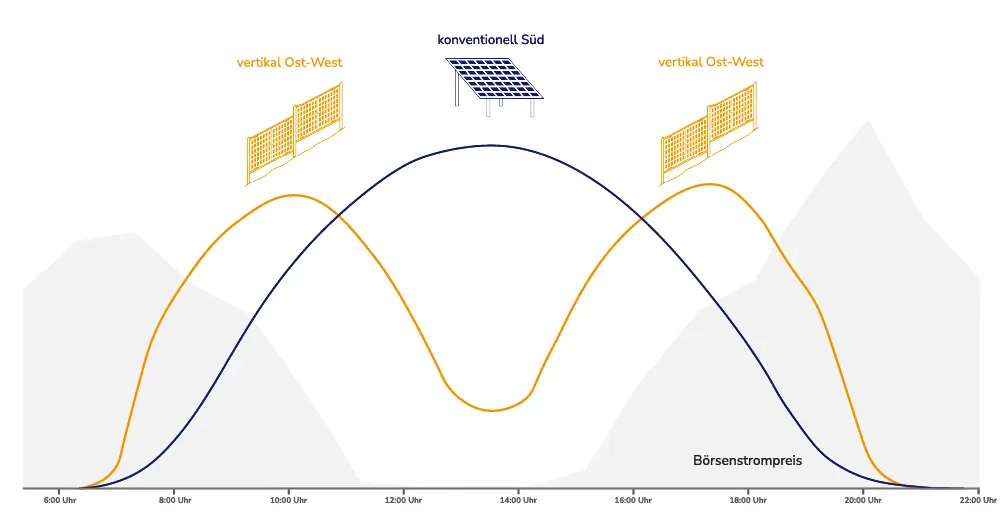
With the conventional south-facing system (orange), the typical pattern is clearly visible: power production rises sharply in the morning, peaks around midday, and then drops again. But this is exactly when the electricity price is lowest—shown by the dashed curve, which reaches its minimum at midday.
The Next2Sun system (blue) shows a completely different profile: it produces two generation peaks—one in the morning and one in the evening. At midday, production is deliberately lower. This profile is created by the vertical east-west orientation and the use of bifacial modules that capture light from both sides.
The key difference becomes clear when compared with the electricity price:
The blue peaks of the Next2Sun system fall exactly in the time windows when prices are also high. The conventional system, on the other hand, produces a lot of electricity mainly when the price is low.
It’s not just the amount of electricity produced that matters—but when it is produced. Next2Sun systems generate power when it is needed and best remunerated. This can make the economic value of the energy produced significantly higher, even with lower total production. As a result, for this day the market value—i.e., the value of the energy produced in €/MWh—is 94% higher for the vertical system than for the south-facing system.
Why is our electricity so valuable?
The key difference lies in the timing of electricity production. While conventional solar systems generate electricity mainly at midday—when demand is low and prices are low—Next2Sun systems produce specifically in the morning and evening hours. That’s exactly when demand is high and electricity is particularly valuable.
This advantage is called a market value advantage.

The chart shows the market value advantage of Next2Sun systems throughout 2025, broken down by different locations. (Source).
Figure: Market value advantages of N2S systems compared to the solar market value
This makes it clear:
- Every month, the systems achieve a positive market value advantage
- This is particularly high in the spring and summer months
- In some months—such as June—peak values of over 200 % are reached
This means: the electricity generated with Next2Sun systems is sometimes worth more than twice as much as average solar power.
It is also striking that the differences vary by location, but the basic principle always remains the same: generation matches demand—not the other way around.
As a reference, the so-called solar market value is used, which is published monthly by the transmission system operators. It describes the average market value of solar power. Thanks to their optimized generation profile, Next2Sun systems consistently exceed this reference value.
Next2Sun doesn’t just produce electricity—it produces the right electricity at the right time.
This makes it significantly more valuable than conventionally generated solar energy.
What makes vertical systems particularly grid-supportive?
Vertical photovoltaics from Next2Sun delivers electricity exactly when it is needed in the grid—especially in the morning and evening, and increasingly in the winter months. This clearly sets it apart from conventional solar systems with their strong midday peak.
These characteristics bring tangible benefits for the energy system:
- Relief for the grids:
Because less electricity is fed in at midday, typical overloads and feed-in peaks are reduced. - More efficient use of storage and markets:
Electricity is available at times of high demand. This reduces the need for expensive storage solutions and improves marketing opportunities. - More stability in the overall system:
By distributing generation more evenly, vertical PV helps balance fluctuations in renewable energy more effectively.
Vienna Energy Michael Horak Ansaat-Schafflerhof
Next2Sun systems make solar power system-friendly: they relieve the grids, increase the efficiency of the energy system, and make a measurable contribution to a stable, flexible, and climate-friendly energy supply.
How can existing systems be used better?
Vertical Next2Sun systems can be added specifically to existing PV systems—unlocking significantly more from existing infrastructure.
The background: conventional south-facing systems heavily utilize grid connections mainly at midday, while in the morning, evening, and winter there is often unused free capacity in the grid. This is exactly where vertical systems come in.

Thanks to their complementary generation, they can meaningfully expand existing systems:
- More capacity without a new grid connection:
Existing grid capacity is utilized better because feed-in is spread out over time. - Cost advantages thanks to existing infrastructure:
Grid connections, land, and technology can continue to be used—savings of 10–15% are possible. - Significant additional expansion possible:
Studies show that existing systems can be expanded by up to 60% additional capacity without relevant economic losses.
It’s not just the amount of electricity produced that matters—but when it is produced. Next2Sun systems generate power when it is needed and best remunerated. This can make the economic value of the energy produced significantly higher, even with lower total production. As a result, for this day the market value—i.e., the value of the energy produced in €/MWh—is 94% higher for the vertical system than for the south-facing system.